
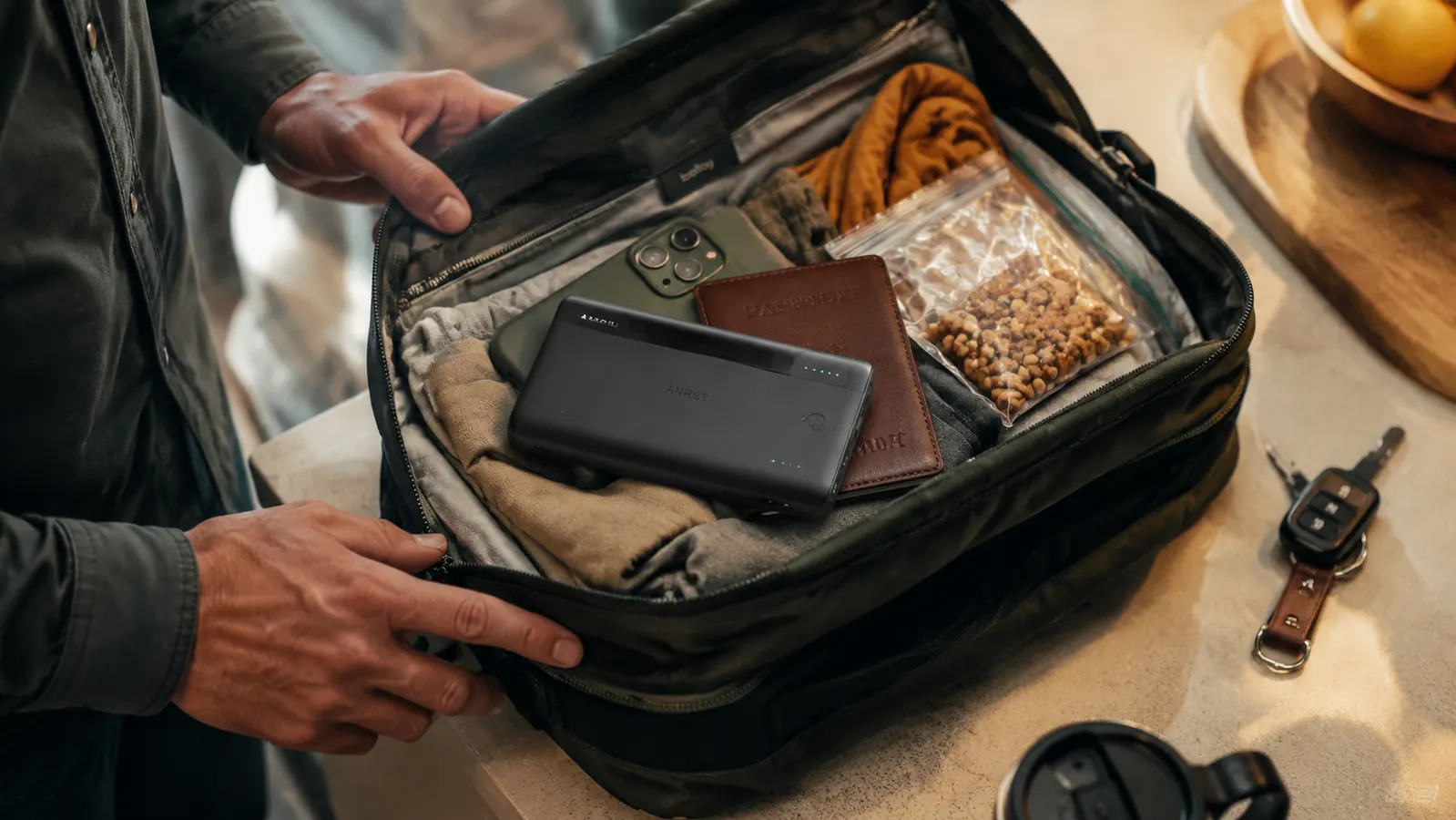
Here is the version of this review you will not find on the product page. I have had the Anker PowerCore 10K for almost two years. I have taken it on road trips to Iowa, a flight to Colorado, a camping weekend in Wisconsin, and more school pickup lines than I care to count. I bought it based on the specs and the reviews and I was mostly happy with it, but the first few weeks taught me things the listing never mentioned. The bank takes more than five hours to recharge itself from empty. The box does not include a wall charger. And that 10,000 milliamp-hour rating? You are not getting 10,000 milliamp hours delivered to your phone. You are getting closer to 6,500 because of how electricity converts. I am still using it. I still pack it every time. But I want you to understand what you are actually buying before you order it.
Quick Verdict
Reliable, compact, and honestly priced, but the slow self-recharge time and missing wall charger are real inconveniences you should plan around before your first trip.
Amazon Check Today's Price →Dead phones do not wait for you to find an outlet. This charger fits in a jacket pocket and keeps your whole family going.
The Anker PowerCore 10K has more than 6,600 reviews and a 4.5-star average. It is compact enough for a purse, powerful enough for two phones from empty. Go in knowing the limits and it will not let you down.
Amazon Check Today's Price on Amazon →How I Have Tested It
I am a practical tester, not a lab tester. I do not have fancy equipment. What I have is two kids (nine and eleven now), a farm in rural Illinois where power outages remind me that backup batteries matter, and two years of actual travel with this specific charger. I tracked how it performed across road trips ranging from three hours to twelve, two flights with connections, and regular day use at things like outdoor markets and county fairs. I also paid attention to the recharge cycle because that is the thing most reviews skip. When you come home from a trip and plug the bank in, how long before it is ready again? That answer changes how you use it.
The short version: the Anker PowerCore 10K performed reliably every time I needed it on the road. It never cut out, never ran hot in a way that worried me, and never refused to turn on. But learning its actual limitations up front would have changed how I prepared for my first few trips with it. This review is the thing I wish I had read before I ordered.
The Real Capacity: What 10,000mAh Actually Means at Your Phone
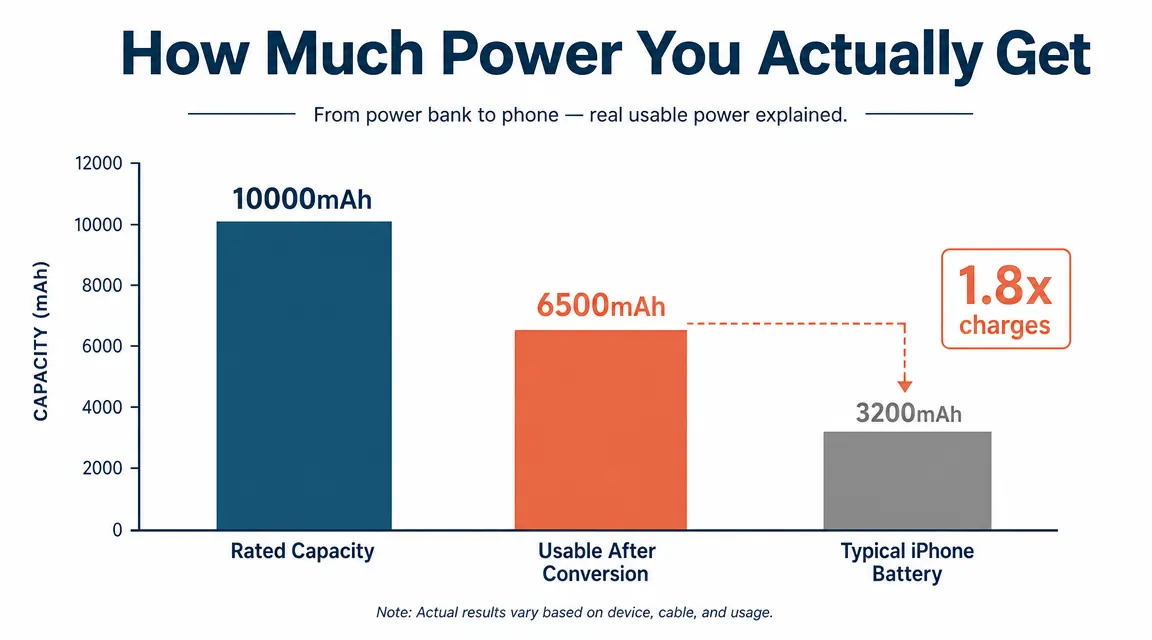
This is the part that catches almost everyone off guard the first time. The rated capacity of this bank is 10,000 milliamp hours. You might look at that number, look at your phone battery (a typical iPhone 15 has a 3,279mAh battery), and think: that is three full charges. It is not. The way portable chargers work, there is a conversion step that happens when the bank's internal voltage is stepped down to the 5-volt output your phone accepts. That process loses energy. You also lose a small amount to heat and to keeping the bank's own circuitry running. Anker is transparent about this if you look carefully at the specs, but it is buried. The usable capacity you actually deliver to a device is closer to 60 to 65 percent of the rated number. For this bank, that is roughly 6,000 to 6,500 milliamp hours of real output.
What that means in practice: if your phone battery is at zero, you will get approximately 1.8 full charges out of this bank, not two, and not three. For most phones that is enough to go from empty to full once, then get another partial top-up. For a tablet with a larger battery, say a 7,000mAh battery on a basic iPad, you are looking at less than one full charge. The bank will top off a depleted iPad to somewhere around 85 to 90 percent, then it is empty. That is genuinely useful, but it is not the unlimited tablet-charging device some people seem to expect when they see the 10,000mAh number.
Once I understood this, I stopped being surprised by it. I started thinking of the bank as covering one full phone charge for each family member with a bit left over. Two kids plus me on a long drive, and I ration accordingly. I charge the phone that is lowest first, then work my way up. We have never run out. But the math matters when you are setting expectations.
The Recharge Time Problem Nobody Talks About
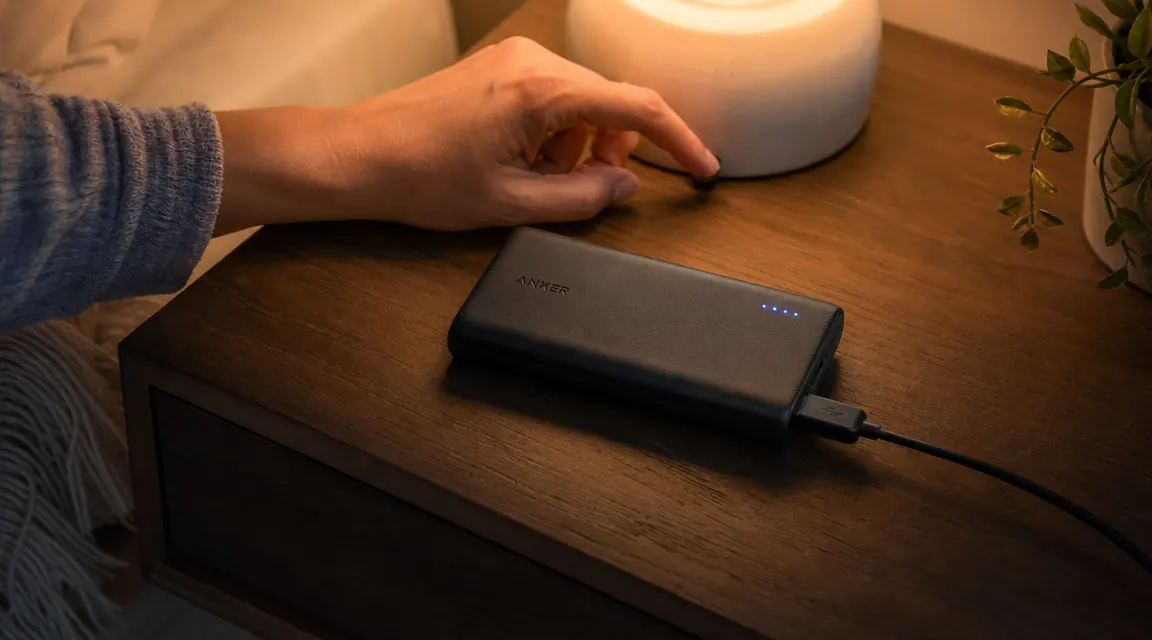
The Anker PowerCore 10K recharges itself through the USB-C input port. The maximum input rate is 18 watts. At that rate, fully recharging from empty to 100 percent takes between five and six hours. In practice, with most standard wall adapters pushing around 10 to 12 watts to the input, expect closer to six or seven hours. That means if you drain the bank completely on a road trip Saturday and plug it in Saturday night, it will not be fully charged again until early Sunday morning.
This matters more than I expected before I owned one. We have a habit of coming home from trips exhausted, dumping everything by the door, and not dealing with it until morning. If you do the same thing and your trip home drained the bank, it may not be fully ready if you need it again quickly. The fix is straightforward, plug it in the moment you walk through the door, but it requires a habit shift. The bank gives you no audible alert when it is done charging. You check it, or you forget it.
For comparison, some of the newer 10,000mAh banks from other brands support 20 or 22-watt input and can recharge in around four hours. The time difference is not enormous, but it exists. If you are someone who travels on consecutive days or does weekend-then-weekday travel frequently, the slower self-recharge rhythm is worth knowing about.
The bank takes over five hours to recharge itself. Come home exhausted from a trip, toss it on the counter, and forget to plug it in, and it will not be ready for Monday morning. That is the habit I had to build.
No Wall Charger in the Box. Here Is Why That Matters.
Open the Anker PowerCore 10K box and you will find the bank, a USB-C to USB-C cable, and the documentation. That is it. There is no wall adapter included. To recharge the bank, you need to supply your own wall charger. If you already have a USB-C adapter, this is not a problem. Most households do at this point, especially anyone with a newer phone. But if you are buying this as a gift for someone, or you are replacing an old bank and do not think about the missing brick, you may find yourself with a bank and no way to charge it until you track down a compatible plug.
The other thing worth noting: not all wall adapters will charge this bank at the same speed. A standard 5-watt USB-A brick, the kind that shipped with older iPhones, will trickle-charge the bank so slowly that a full recharge could take twelve hours or more. To take advantage of the 18-watt maximum input, you need a USB-C Power Delivery adapter rated at 18 watts or higher. Most people already have one if they have a newer laptop or phone charger. But if you are buying this for a grandparent or someone with older gear, the adapter situation is worth mentioning upfront.
The Charging Speed Going Out Is Also Modest
The USB-C output port on this bank maxes out at 18 watts with PowerIQ 3.0. That is respectable but not fast by 2025 standards. If you have a phone that supports 25-watt or 45-watt fast charging, you will notice that charging from this bank feels slower than charging from a wall outlet. A completely dead modern Android phone will take 90 minutes or more to reach full charge. An iPhone will take around two hours for a full charge from zero. That is workable when you are sitting on a plane or riding in the back seat, but it is not the rapid refill you might hope for if you are on a short layover with twelve percent battery and forty minutes before boarding.
The USB-A port outputs 12 watts, which is fine for older devices or keeping something topped off, but noticeably slower than the USB-C port. If you are charging two devices at once and both are plugged in simultaneously, the bank splits its output and both devices charge more slowly than if one were plugged in alone. That is standard behavior for any dual-port bank, but it trips people up. Prioritize the lower battery device and keep the other one plugged in as backup.
What It Gets Right, and Why I Still Pack It Every Time
None of the limitations above have caused me to leave this bank at home. Here is why. The physical size is genuinely remarkable for the capacity. It measures about 5.5 inches long, 2.6 inches wide, and just under an inch thick. It weighs 6.7 ounces. I can drop it into the side pocket of a purse, tuck it in a jacket pocket, or slip it into the front pouch of a backpack. Many higher-capacity banks are significantly heavier and thicker to the point where you feel them all day. The form factor on this one disappears.
The build quality is also genuinely solid in a way that budget alternatives are not. The matte plastic casing has not cracked, scratched badly, or developed any soft spots after two years. The USB-C and USB-A ports have not loosened even slightly. That matters because port looseness is the most common failure mode I have seen in cheaper banks, where the connection gets wobbly after several months and the cable starts cutting in and out mid-charge. This bank has shown no sign of that.
The four-LED charge indicator is simple and accurate. I know at a glance whether I have a full bank, three-quarter, half, or nearly empty. I check it before every trip and the habit takes two seconds. Anker also backs this with an 18-month warranty and has a real customer service line, which is more than you get from most of the no-name banks that flood the same product search. In a market full of banks I do not trust, this is one I do.
Pros
- Genuinely compact form factor, fits in a jacket pocket without feeling like a brick
- Dual-port output charges two devices simultaneously on the road
- Solid build quality with no port loosening or casing damage after two years
- LED indicator gives a reliable at-a-glance charge level before any trip
- Clears TSA carry-on rules with zero friction
- 18-month warranty and real Anker customer support backing it up
Cons
- Recharges itself slowly, five to seven hours from empty depending on your wall adapter
- No wall adapter included in the box, you must supply your own USB-C brick
- Real usable capacity is about 6,000 to 6,500mAh after conversion, not the full 10,000 listed
- Output charging speed is modest at 18 watts, noticeably slower than a fast-charge wall outlet
- No wireless charging support, requires cables every time
A Note on the Alternatives I Considered
Before settling on this bank I tested a 20,000mAh option from a different brand. It charged faster and held more. It also weighed nearly a pound and barely fit in a bag pocket. I used it twice and left it home the third trip because it felt like carrying a small brick. Capacity only helps you if you actually bring the thing. The Anker gets packed because it does not feel like a sacrifice to carry it. That is a real consideration, especially for a parent already managing snacks, wipes, a water bottle, and a wallet.
I have also looked at the 5,000mAh version of this same bank. It is smaller, but for a family of four where everyone has a device, 5,000mAh gets used up before the drive ends. The 10K is the floor for family travel. For most everyday trips it covers what you need at a weight you will not notice. You can read our complete long-term look in the Anker PowerCore 10K review, which covers two full years of performance over time.
Who This Is For
This bank is the right fit if you travel primarily by car, fly a few times a year, and want a charger that takes up almost no space and reliably covers your family for a full day of travel. It is especially good for people who do not need the bank to sprint, just to steadily keep things alive while you drive, wait, or explore. If you pack the night before, plug in the bank when you start packing, and let it recharge overnight, the slow self-charge time is a non-issue. Build that habit once and it stays.

Who Should Skip It
If you do back-to-back travel days, depend on fast device charging in a pinch, or need to power a tablet multiple times per trip, you need a more powerful bank. The slow recharge cycle and the 18-watt output limit will frustrate you. Look at the 20,000mAh Anker with 65-watt PD output instead. And if you are buying this for a child who mainly needs a tablet, know the bank gets one tablet charge and is empty. For multiple daily tablet charges, this bank is the wrong size.
For the rest of the travelers out there, the parents loading kids into a minivan for a summer drive, the travelers spending six hours in a terminal with no outlet in sight, the people who just need one reliable thing in the bag that keeps phones alive without asking anything complicated of them, this bank does that job well. Understanding the limits going in is what makes it work. You can also check out our full guide to keeping every phone charged on a long road trip for a broader strategy that goes beyond any single charger.
You now know the real limits. And it is still the charger I pack every time.
Slow to recharge itself, no wall adapter in the box, real usable capacity closer to 6,500mAh. Still compact, still dependable, still priced around $25.99. For everyday family travel, that trade-off makes sense. Over 6,600 buyers agree.
Amazon Check Today's Price on Amazon →